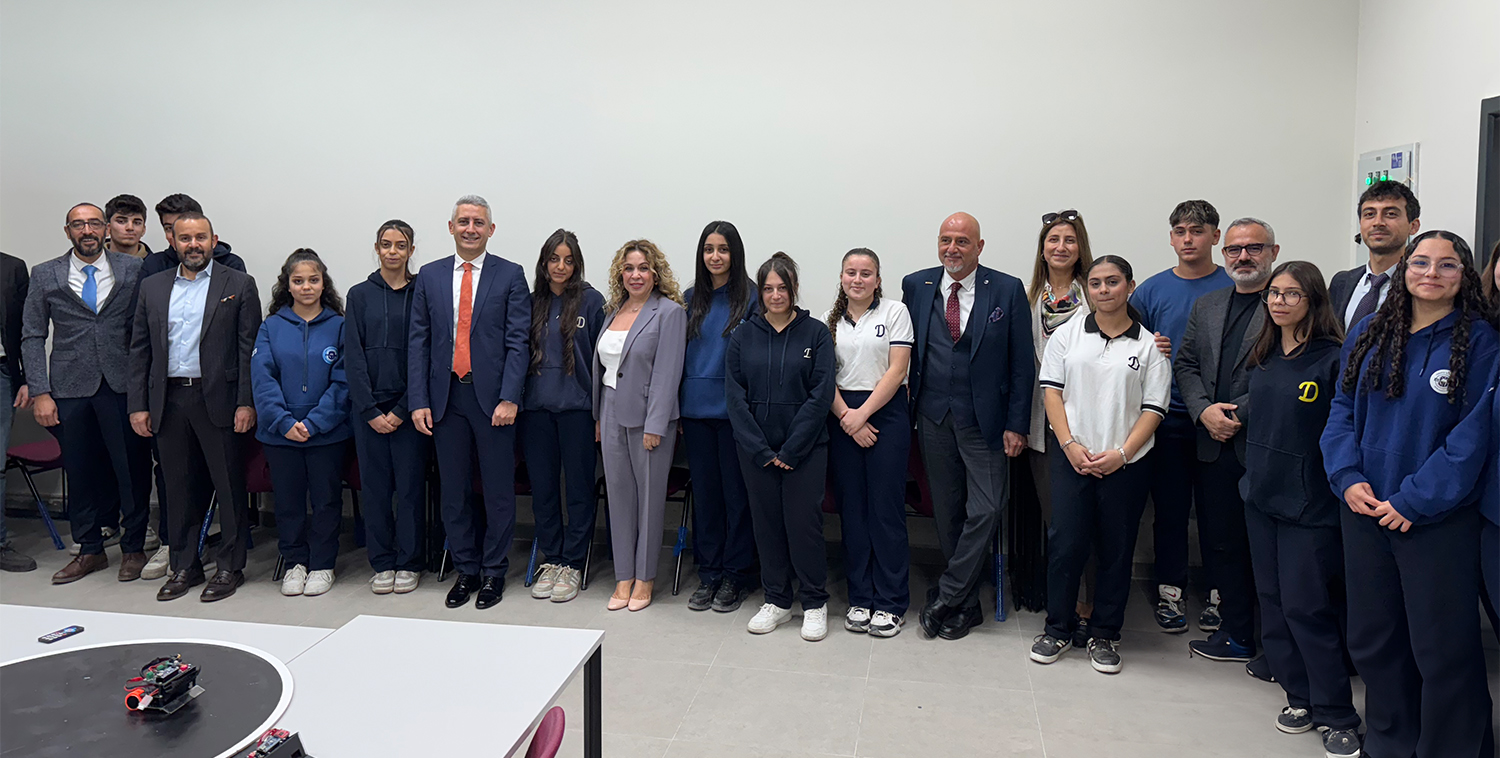


TÜBİSAD continues its efforts under the Technological Education Container/Classroom (TEK/TES) project, which aims to enhance young people’s access to technology and promote equal opportunities in education in the regions affected by the February 6 earthquakes. The project’s 27th classroom has been launched in Hatay with the support of Softtech.
Initiated by TÜBİSAD with the motivation that “kindness is contagious,” the TEK/TES project aims to strengthen digital inclusion in the region. In this context, the 27th Technological Education Classroom, supported by Softtech, has been opened for students.
The classroom, established within İş Bankası Defne Anadolu High School, which was constructed by İş Bankası, offers students the opportunity to experience information technologies, coding, and creative technology applications. Softtech, Türkiye’s leading technology company, provided the classroom’s technology infrastructure, computers and application equipment, as well as educational materials.
A total of 615 students—380 girls and 235 boys—are currently enrolled at the school. The newly opened Technological Education Classroom will be actively used for information technologies and software courses. In addition to digital equipment, a library containing books on IT, coding, and communication has been set up to support students’ technology-focused learning journeys.
The opening ceremony, attended by Hatay Governor Mustafa Masatlı, brought together İş Bankası CEO Hakan Aran, İş Bankası Deputy CEO and Chairperson of Softtech’s Board of Directors Sabri Gökmenler, İş Bankası Deputy CEOs Suat E. Sözen and Mehmet Celayir, Softtech CEO M. Bülent Özçengel, and TÜBİSAD Vice Chairs Murat Boyla, Işıl Kılınç Gürtuna, and Emre Hantaloğlu. On Wednesday, November 19, the group visited the Technological Education Classroom and met with the school administration and students.
Softtech CEO M. Bülent Özçengel emphasized that supporting the educational journey of young people in the earthquake-affected region is one of the most meaningful contributions to Türkiye’s future. He stated:
“With this classroom, launched in collaboration with TÜBİSAD, we want to contribute to young people’s skills and empower them to become active participants in the digital world. The goal was the same last year when Softtech Volunteers supported the education of middle school students in the region through our theater project: to contribute to a sustainable and transformative learning experience that reduces inequalities.”
TÜBİSAD Vice Chair Murat Boyla said:
“With the TEK/TES project, we are determined to enhance young people’s access to technology, strengthen their digital skills, and promote equal opportunities. By opening the 27th Technological Education Classroom, we have taken yet another important step toward this goal. We would like to thank Softtech for their collaboration in bringing this project to life. We will continue to develop sustainable and long-term solutions for regions and individuals with limited access to technology across Türkiye, and to contribute to our country’s development through educational infrastructure projects.”
A Partnership Empowering Türkiye’s Future Through Technology
TÜBİSAD’s Technological Education Classrooms project in the earthquake-affected region creates lasting learning spaces where young people gain access to technology, develop digital competencies, and engage in a culture of creation. These classrooms encourage students not only to consume technology but also to design, produce, and discover.
With the contributions of teachers, local stakeholders, and volunteer experts, workshops, coding trainings, and project development sessions help transform these Technological Education Classrooms from simple learning environments into centers of creation and growth.
TEK and TES units—mobile or permanent, technology-equipped classrooms with a capacity of 20 students each—serve as centers not only for technology education but also for various IT, social, and cultural activities, vocational training, and psychological support for different age groups, acting as “Rotational Learning Centers.” The project aligns with the United Nations’ principles of Quality Education, Reduced Inequalities, Innovation, and Partnerships for the Goals, as well as Türkiye’s broader social development goals.
Enhancing Access to Technology for Youth in the Earthquake-Affected Region